
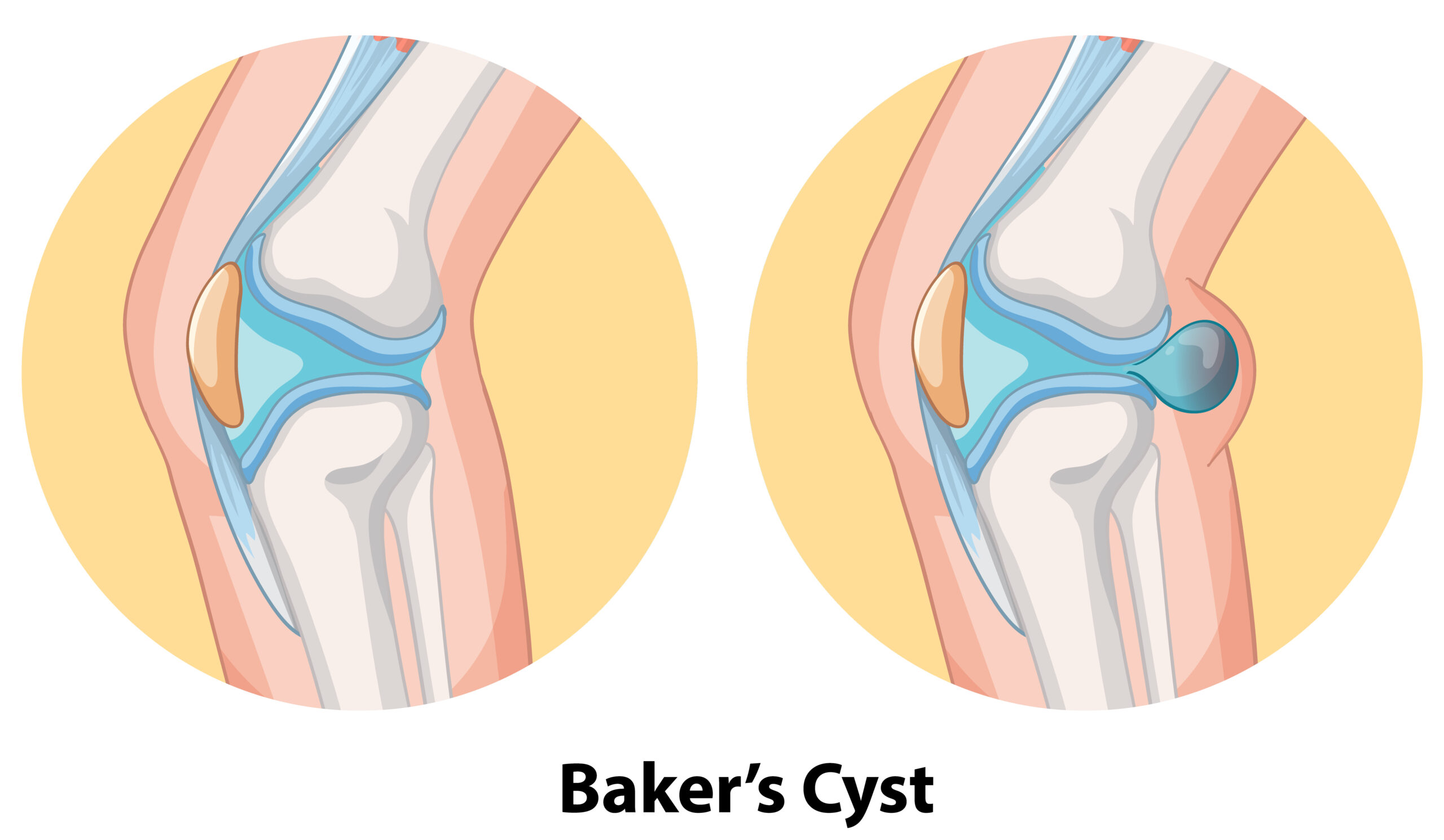
What is a Baker’s Cyst?
A Baker’s Cyst, also called a popliteal cyst, is a fluid-filled swelling behind the knee. This swelling can cause discomfort or tightness. Often, it is linked to knee pain or knee swelling. The cyst forms when extra joint fluid bulges out from the knee joint. While it is not usually dangerous, it can affect daily movement. According to the American Academy of Orthopaedic Surgeons, Baker’s Cyst is a common cause of swelling behind the knee.
Common Symptoms and Warning Signs
Many people with a Baker’s Cyst notice a lump or swelling behind the knee. However, some may not feel any symptoms. Still, it is important to watch for warning signs. For example, you may feel:
In rare cases, the cyst can burst. If this happens, fluid may leak into the calf, causing sharp pain, redness, or swelling. Therefore, it is important to seek help if you notice these signs.
Causes and Risk Factors
Baker’s Cyst often develops due to other knee problems. For instance, it may result from:
Because these conditions increase joint fluid, a cyst can form. People over age 40 are more likely to get a Baker’s Cyst. Athletes and those with past knee injuries also face higher risk. Additionally, being overweight can put extra stress on the knee, raising the chance of cysts.
Diagnosis Methods
Doctors use several ways to diagnose a Baker’s Cyst. First, they will ask about your symptoms and check your knee. Next, they may use tests to confirm the diagnosis. These tests include:
Sometimes, X-rays help rule out other causes of knee pain. Early diagnosis helps guide the best treatment plan.
Treatment Options for Baker’s Cyst
Most Baker’s Cysts do not need surgery. Instead, doctors often suggest simple treatments first. For example, you may try:
If the cyst is large or painful, your doctor may drain the fluid with a needle. Sometimes, a steroid injection can help reduce swelling. However, if the cyst keeps coming back or causes severe pain, surgery may be needed. Surgery removes the cyst or treats the underlying knee problem. According to the Mayo Clinic, most people recover well with these treatments.
Prevention Tips and Lifestyle Guidance
While you cannot always prevent a Baker’s Cyst, you can lower your risk. Try these tips:
Because healthy knees are less likely to develop cysts, these steps can help protect your joints.
When to See a Doctor
Most Baker’s Cysts are not serious. However, you should see a doctor if you notice:
Sometimes, these signs can mean a burst cyst or a blood clot. Therefore, quick medical care is important. Early treatment can prevent problems and help you recover faster.
Conclusion
Baker’s Cyst is a common cause of knee swelling and pain. With the right care, most people feel better quickly. If you have symptoms or concerns, consult an orthopedic specialist for personalized advice on Baker’s Cyst.