
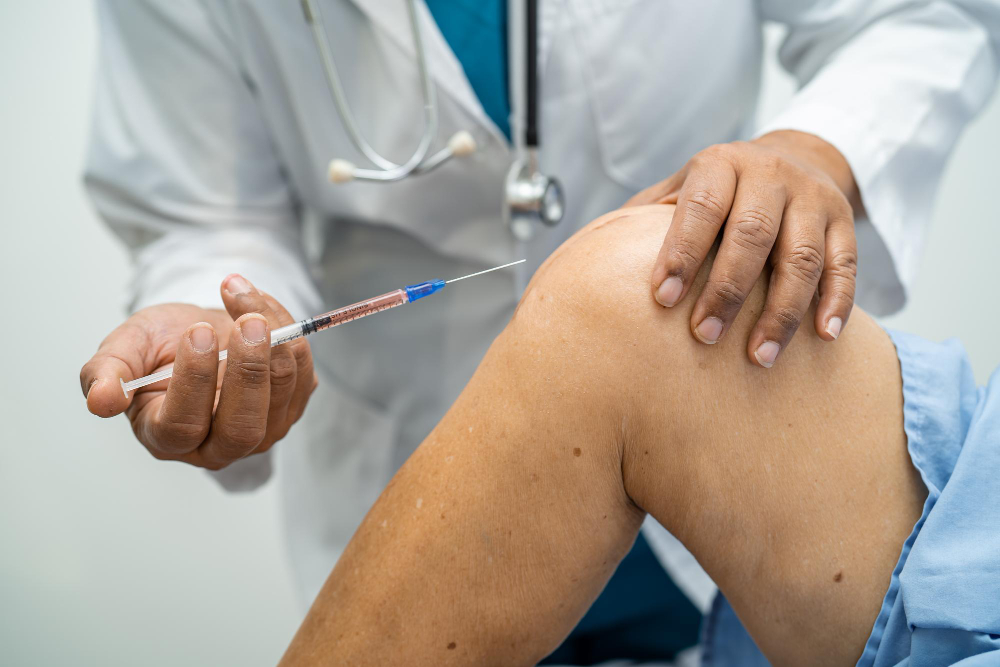
Knee pain affects many people and can limit daily activities. Often, patients ask about the best knee pain treatment options. Two popular choices are steroid injections and PRP therapy. The debate of steroids vs PRP for knee pain is important because both offer relief, but in different ways. Understanding these treatments helps you make informed decisions about your health.
What Causes Knee Pain?
Many things can cause knee pain. Sometimes, it is due to injury, like a sprain or torn ligament. Other times, it comes from wear and tear, such as osteoarthritis. Infections or medical conditions like gout can also lead to pain. Because knee pain has many causes, treatment options may vary. Knowing the reason for your pain is the first step in finding relief.
What Are Steroid Injections?
Steroid injections are a common knee pain treatment. Doctors inject a medicine called corticosteroid directly into the knee joint. This medicine reduces swelling and eases pain quickly. Usually, people feel better within a few days. Steroid injections are often used for arthritis, injury, or swelling in the knee.
What Is PRP Therapy?
PRP stands for Platelet-Rich Plasma. In this therapy, a doctor takes a small amount of your blood. Next, they spin it in a machine to separate the platelets. Then, they inject the platelet-rich part into your knee. PRP helps the body heal by using your own growth factors. Many people choose PRP for non-surgical knee pain relief.
Steroids vs PRP: Key Differences
When comparing PRP vs steroid injection for knee pain, several differences stand out. Both treatments aim to reduce pain, but they work in unique ways. Here is how they compare:
Which Treatment Is Better for Knee Pain?
Choosing the best injection for knee pain depends on your needs. Studies show that steroids work fast, but their effect may fade over time. PRP may offer longer relief, especially for mild to moderate arthritis. However, PRP is not always covered by insurance and may cost more. Your age, health, and cause of knee pain also matter. According to the CDC and peer-reviewed journals, both treatments are safe when done by trained doctors. Always talk to your doctor about which option fits you best.
Potential Side Effects and Risks
Both treatments are generally safe, but side effects can happen. Knowing the risks helps you make a better choice.
Frequently Asked Questions
In summary, both steroids and PRP offer non-surgical knee pain relief. Your doctor can help you choose the best knee pain treatment option for your needs. Consult an orthopedic specialist to discuss the best knee pain treatment for your needs.